
At the professional level, lacrosse is unforgiving. Every sprint, every dodge, every hard plant puts stress on the body. Over time, the smallest inefficiencies add up. For Jack Hannah, that reality showed up first in his feet.
Hannah competes at the highest level in both the National Lacrosse League and the Premier Lacrosse League, playing with the Philadelphia Waterdogs and the Colorado Mammoth. Years of training and competition began to take a toll. His foot was sliding forward inside his cleats, jamming his pinky toes and the outside of his toenails. It was not a single injury, but constant wear that slowly chipped away at comfort and confidence.
When Your Feet Become the Limiting Factor
Foot pain has a way of sneaking into performance. It changes how you move, how aggressively you cut, and how much you trust your plant. Hannah knew something had to change when discomfort became a regular part of training instead of an occasional nuisance.
After switching to Blumaka insoles, the first improvement was comfort. Within a few weeks, his feet felt noticeably better. But comfort was only part of the story.
What truly stood out was traction.

The Difference Between Moving and Committing
Once Hannah felt his foot stay in place inside the cleat, the game changed. Traction removed hesitation. When the foot stopped sliding, cuts felt sharper and more controlled. That stability created confidence, and confidence allowed him to fully commit to movement without second guessing his footing.
For a player who splits time between indoor and outdoor lacrosse, that consistency matters. Outdoor play demands high speed dodges and sprints in space. Indoor lacrosse requires constant lateral movement in tight quarters. Different surfaces, different demands, same need for reliable footing.
Stability Travels Up the Body
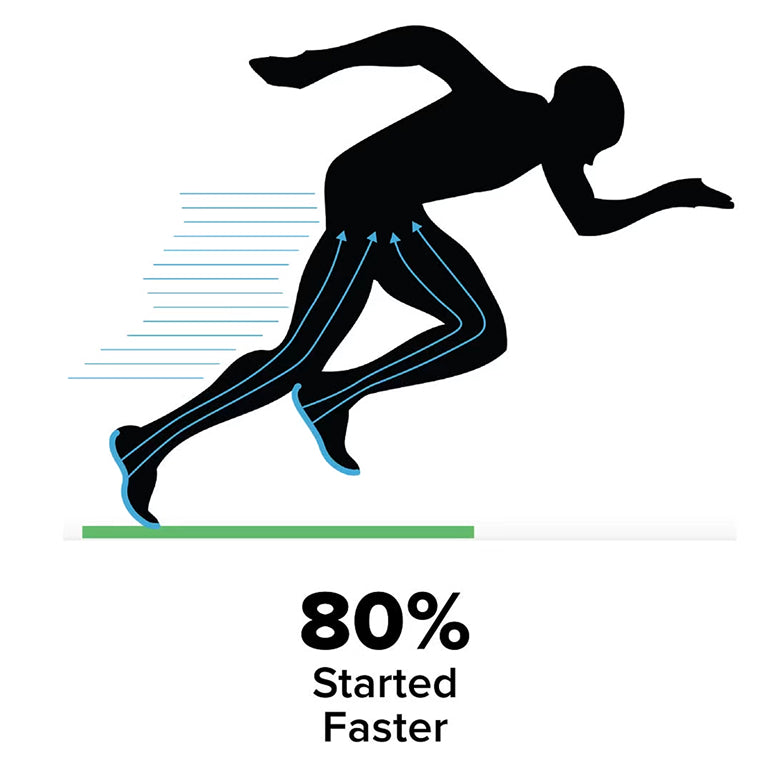
Hannah emphasizes that everything starts at the ground. When the foot hits the surface in a stable position, force transfers cleanly upward through the ankle, knee, and leg. When there is slippage, that force is lost. You give up power, balance, and efficiency without realizing it.
Better traction does not just protect the foot. It improves how the entire body moves.
Why This Matters for Developing Players
In addition to playing professionally, Hannah trains young athletes from middle school through college. One pattern shows up consistently. Many players struggle to learn proper cutting mechanics because their feet do not stay in place.
Stable footing helps athletes build confidence early. That confidence allows them to learn better movement patterns, decelerate safely, and re accelerate with control. Over time, those fundamentals become second nature.

The Next Level Is Built on Details
When asked what separates players who reach the next level, Hannah does not point to talent alone. He points to mindset. Caring about the small things. Being obsessed with getting better. Showing up with the right attitude when things get hard.
Footing might seem like a small detail. At the professional level, it is not.
For Hannah, eliminating slippage removed a distraction and unlocked a more confident version of his game. Less pain. More stability. Better cuts.
Performance, he believes, starts from the ground up.