





Plantar fasciitis is one of the most common causes of heel pain — and one of the most frustrating. This guide covers what it is, whether insoles can help, what to look for, and when to get professional care.

Can insoles help plantar fasciitis? For many people, yes — a supportive insole with firm arch support and heel cushioning can ease the strain on the plantar fascia and make standing and walking more comfortable. Insoles don't cure plantar fasciitis, and they work best alongside stretching, supportive shoes, and, when pain persists, guidance from a clinician.
What is plantar fasciitis?
Plantar fasciitis is irritation of the plantar fascia — the thick band of tissue that runs along the bottom of your foot from the heel to the base of the toes. That band supports your arch and absorbs load every time you step. When it's overloaded or repeatedly strained, small irritations build up, the tissue becomes inflamed, and it hurts — usually right where the fascia attaches near the heel.
It's one of the most common foot complaints, and it shows up especially in runners, people who stand or walk all day, and anyone who's recently ramped up their activity.
What does plantar fasciitis feel like?
The classic sign is sharp heel pain with your first steps in the morning, or after you've been sitting for a while. The fascia tightens at rest, then pulls when you load it again. The pain often eases as you warm up, but tends to come back after long periods on your feet. Some people feel it more as a dull ache along the arch.
Heel pain can have several causes, though, so this isn't a substitute for a diagnosis — see when to see a doctor below.
What causes it?
It's usually a combination of factors rather than one single cause. Common contributors include:
- A sudden jump in mileage or time on your feet
- Tight calves and Achilles tendons
- High or flat arches, or feet that roll inward
- Unsupportive or worn-out shoes, and hard surfaces
- Extra load on the foot over time
Do insoles help plantar fasciitis?
For many people, a supportive insole is a helpful part of managing plantar fasciitis. Podiatrists and physical therapists commonly include arch support and cushioning in a broader plan. The logic is simple: a supportive insole does two things at once — it holds the arch so the plantar fascia isn't overstretched with every step, and it cushions the heel where the pain concentrates. Together, that reduces the day-to-day strain that keeps the tissue irritated.
Two honest caveats. First, relief is individual — some people feel a difference within a couple of weeks, others need longer or additional treatment. Second, insoles support recovery; they don't cure the condition. They work best combined with stretching, sensible footwear, and, if pain persists, professional care.
What should you look for in an insole?
- Firm, supportive arch — enough to actually hold the arch, matched to your foot's shape. Too little does nothing; too much can feel uncomfortable.
- Heel cushioning — a cushioned heel to soften impact where the pain sits.
- The right fit — sized and trimmed to your shoe so it doesn't slide around.
- Cushioning that lasts — foam that holds its shape rather than packing flat in a few weeks.
- Works in your shoes — fits the shoes you actually wear, from trainers to work shoes.
How do you choose the right arch height?
Match the support to your foot. A higher arch profile suits people with a pronounced arch or anyone who wants firmer support; a medium profile suits most feet; a lower profile suits flatter feet or low-volume shoes. If you're not sure, medium is a safe starting point — or ask a clinician or a fitting specialist to help you match it.
What else helps, beyond insoles?
Insoles are one piece of the puzzle. Most plans also include:
- Stretching — calf and plantar-fascia stretches (a wall calf stretch, rolling your arch on a ball or frozen bottle).
- Supportive footwear — avoid flat, worn-out shoes and going barefoot on hard floors.
- Managing load — ease back when it flares, then build activity up gradually.
- Rest and ice — after a flare-up.

For stubborn cases, clinicians may add night splints, taping, physical therapy, or other treatments.
See a physician or podiatrist if heel pain is severe, lasts more than a few weeks despite self-care, follows an injury, or comes with numbness, tingling, swelling, or redness — or if you have diabetes or circulation issues. A clinician can confirm it's plantar fasciitis (and not something else) and tailor a treatment plan. This article is general information, not a diagnosis.

How Blumaka insoles can help
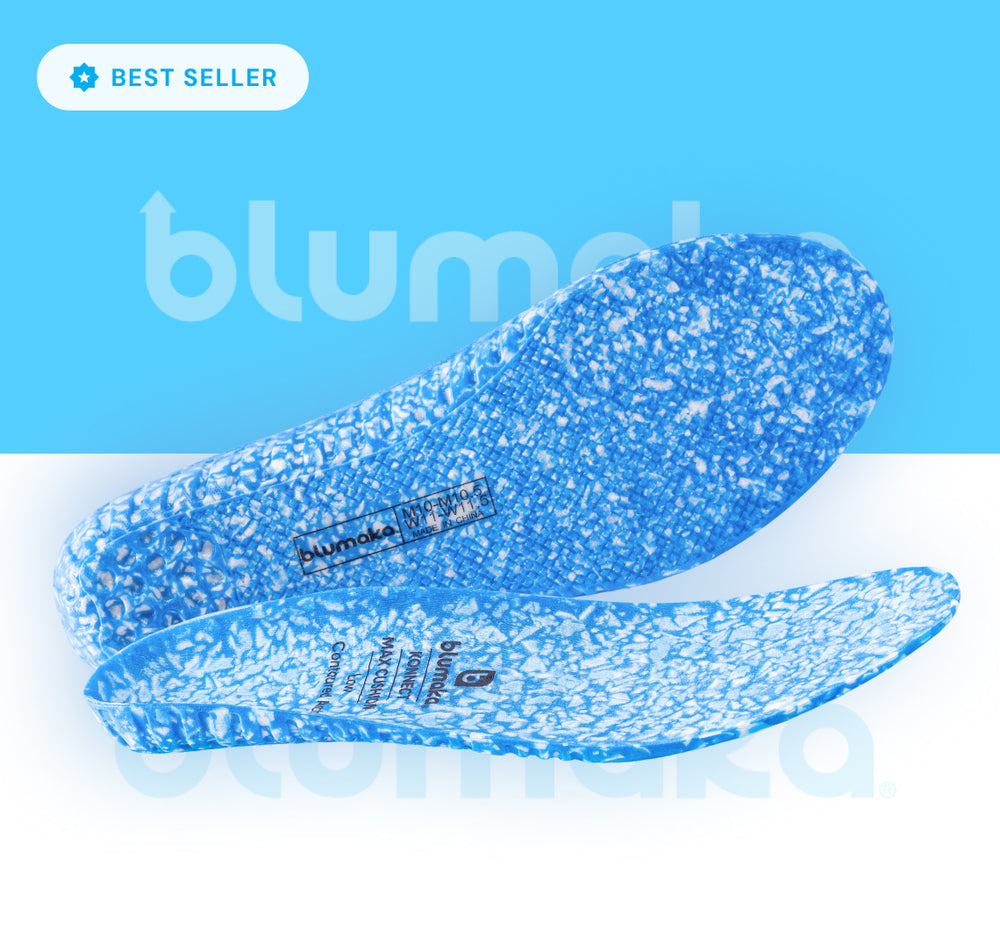
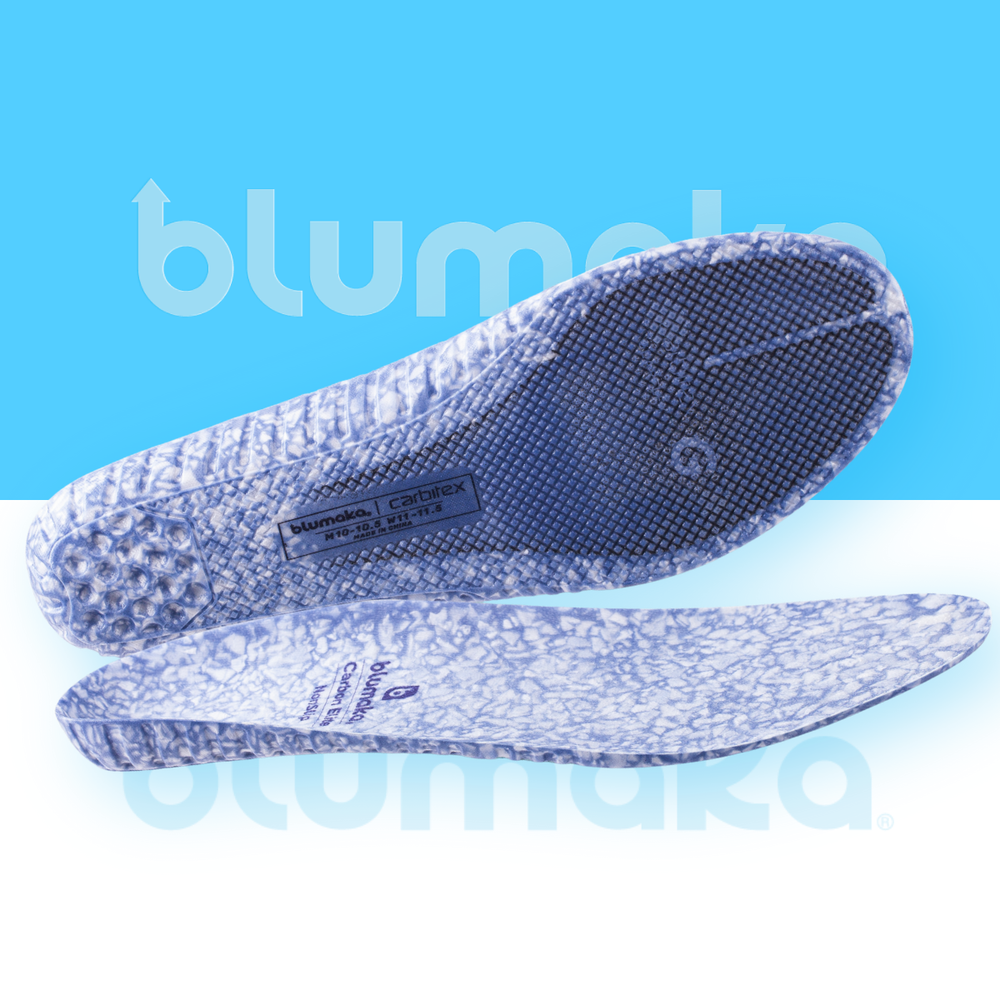
Blumaka's insoles are built for support and comfort through long days on your feet. They come in three arch heights so you can match the support to your foot, with sculpted arch support and substantial heel cushioning made from reclaimed premium foam that holds its shape. Many people managing plantar fasciitis — including athletes on their feet for hours — use them to stay comfortable longer.

"Blumaka's NonSlip Arch Support insoles eased my plantar fasciitis pain, helping me stay on my feet longer."— Trang Huynh-McClain, D1 tennis player

"Blumaka's insoles provide the support and cushion that I need to help alleviate my plantar fasciitis pain."— Tia Elpusan, D1 tennis player

Where to start
The Performance Insole pairs sculpted arch support with substantial cushioning — a good starting point for all-day comfort. Every pair comes in three arch heights and is backed by a 90-day guarantee, so you can try it.
Blumaka insoles are comfort and support products, not medical devices, and they won't cure plantar fasciitis. If your pain is severe or persistent, see a clinician.