





Insoles don't last forever — but some last far longer than others. Here's how long you should expect, the signs it's time to replace them, and why the foam under your foot makes all the difference.

How long do insoles last? Most standard foam insoles pack flat within a few hundred miles, or roughly 3–6 months of daily wear. Higher-quality insoles made from resilient foam like ETPU last much longer — Blumaka's are proven to about 1,000 miles and outlast three to four pairs of shoes. Replace any insole once the cushioning feels flat, the top cover is worn smooth, or the support is gone.
How long do insoles actually last?
It depends on the material, your body weight, your activity, and how often you wear them — but here's a realistic guide:
- Thin stock / EVA insoles (the ones your shoes ship with): a few hundred miles, or about 3–6 months of daily wear, before they pack flat.
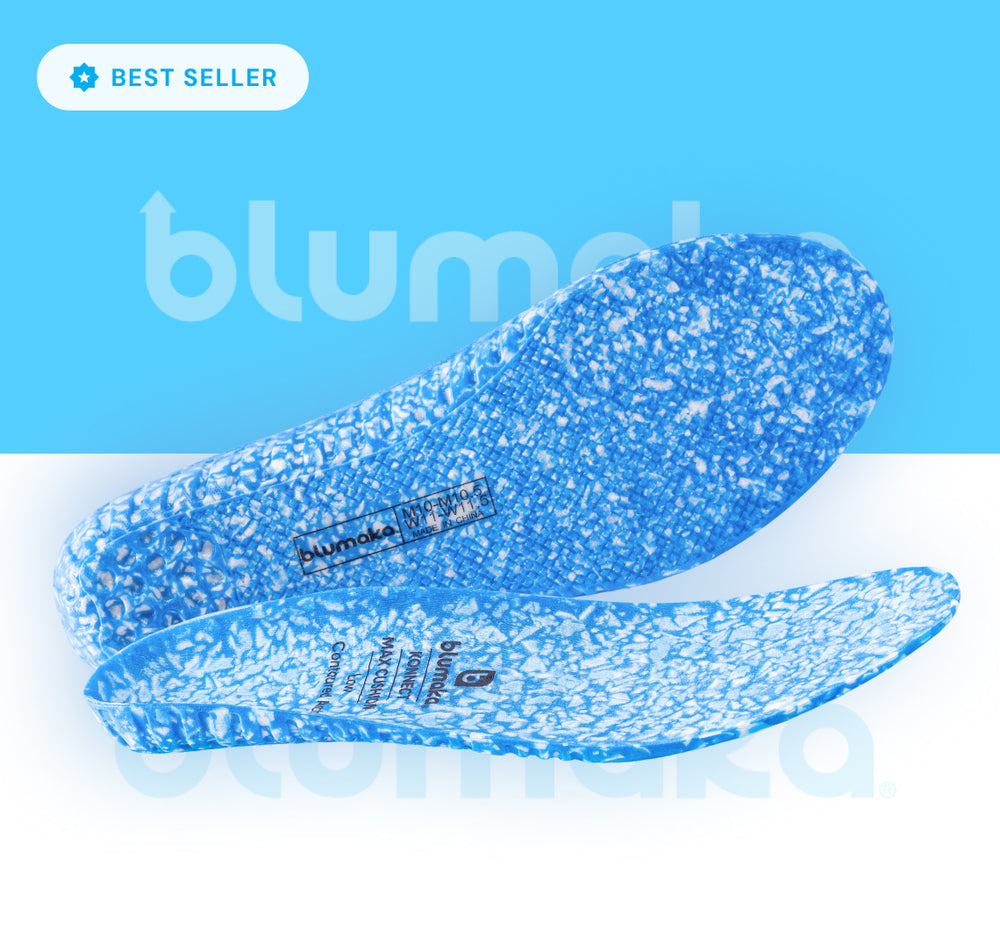
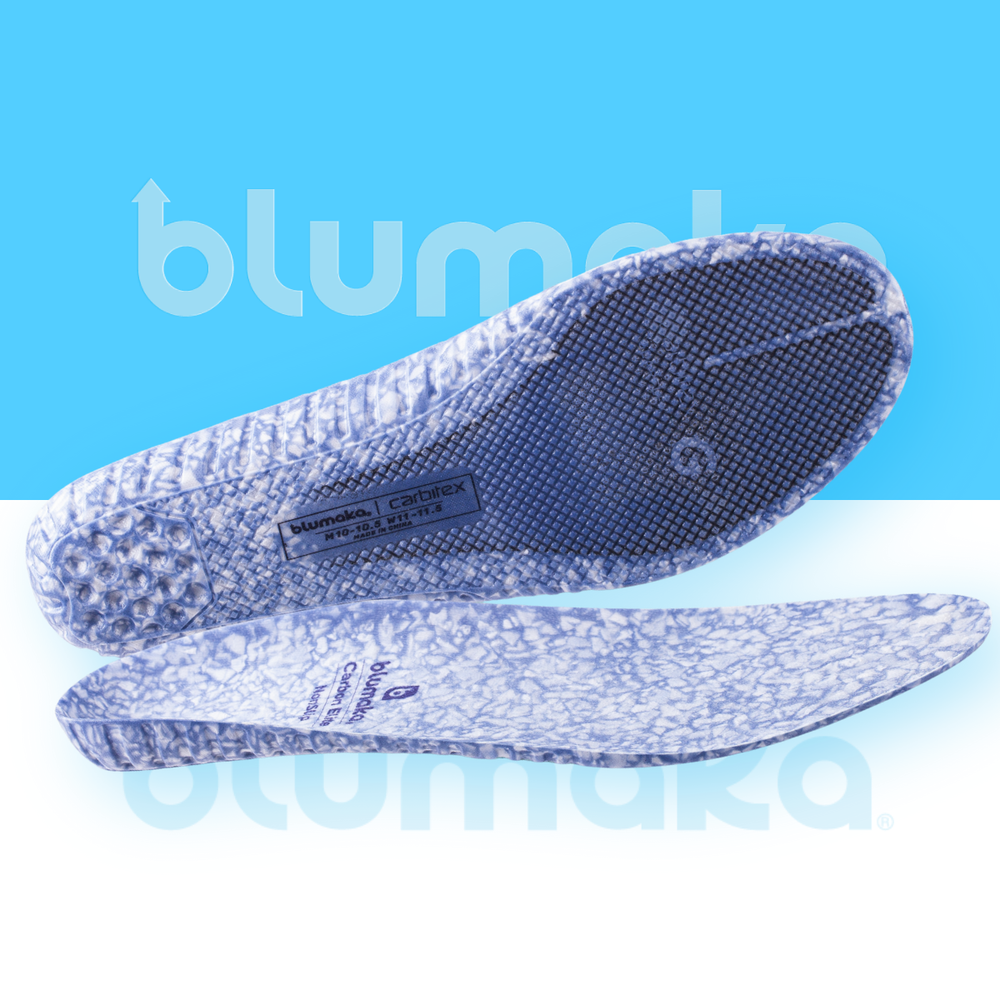
- Premium resilient-foam insoles (like ETPU): far longer, because the foam keeps springing back. Blumaka's reclaimed-ETPU insoles are proven to about 1,000 miles — roughly the life of a pair of running shoes, and enough to outlast three to four pairs.
A simple rule of thumb: if you've put around 1,000 miles or a year of heavy use on a pair, it's worth checking them against the signs below.
What are the signs you need to replace your insoles?
Insoles wear out gradually, so it's easy to miss. Look for:
- Flat cushioning — you feel the shoe's hard midsole more than the insole.
- Visible compression — permanent dents where your heel and forefoot press down.
- A worn top cover — smooth, thin, or peeling where your foot sits.
- Collapsed support — the arch no longer holds its shape.
- New aches or odor — fresh hot spots, foot fatigue, or a smell that won't wash out.
Why do some insoles wear out so much faster than others?
It comes down to the foam. Two insoles can look similar and perform completely differently over time, because the material either bounces back after each step — or slowly crushes down and stays there.

EVA vs. ETPU foam: what's the difference?
| EVA (standard foam) | ETPU (Blumaka) | |
|---|---|---|
| What it is | Ethylene-vinyl acetate — cheap, light, common in stock insoles | Expanded thermoplastic polyurethane — springy foam used in premium midsoles |
| Over time | Takes a permanent "compression set" — packs flat and stays there | Returns to shape after each step, holding its cushioning |
| Energy return | Fades as it compresses | Springs back, keeping its bounce |
| Lifespan | A few hundred miles / months | ~1,000 miles, outlasting 3–4 pairs of shoes |
Most stock insoles are thin EVA, which is why they flatten so quickly. ETPU costs more to make, but it keeps its cushioning and energy return far longer — so you replace it much less often.
How can you make your insoles last longer?
- Air them out — take them out of your shoes between wears so they can dry.
- Skip the washing machine and dryer — heat breaks foam down. Spot-clean with mild soap and air dry.
- Use the right size — an insole crammed into the wrong shoe deforms faster.
- Rotate pairs — if you're high-mileage, alternating two pairs lets each recover between uses.
- Replace on the signs, not the calendar — worn foam does nothing for your feet.

Longer-lasting insoles mean fewer replacements and less landfill. The material matters too: Blumaka's foam is up to 85% recycled and produced with 99% less water and 65% fewer carbon emissions than traditional EVA insoles.
How Blumaka builds insoles to last
Every Blumaka insole is built from reclaimed premium ETPU foam that springs back instead of packing flat. That's why they're proven to about 1,000 miles, outlast three to four pairs of shoes, and keep their cushioning far longer than the thin foam most shoes ship with — all while being up to 85% recycled.

Built to go the distance
Reclaimed ETPU foam, three arch heights, and a 90-day performance guarantee — proven to last about 1,000 miles so you replace them far less often.