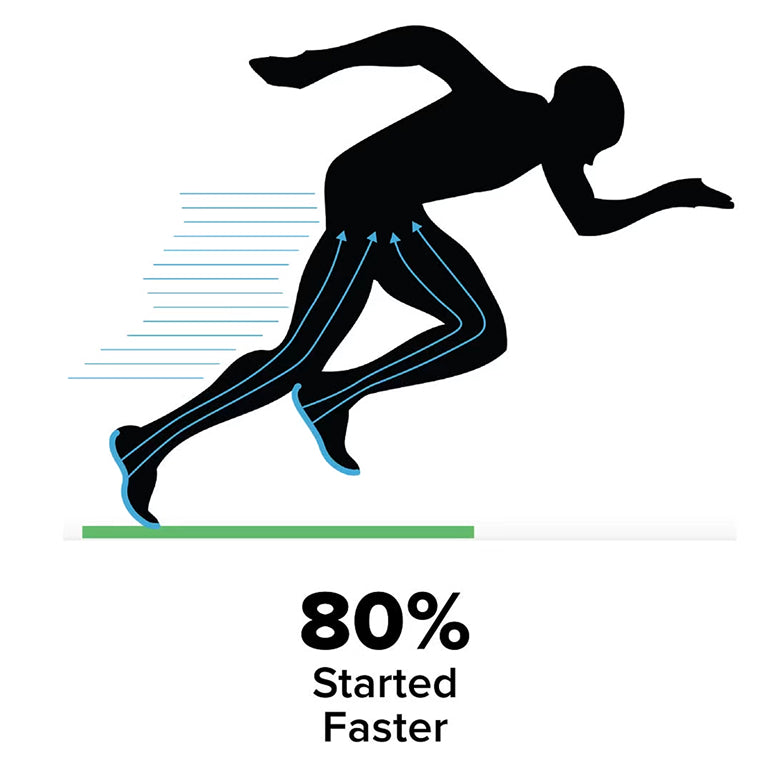

Insoles are often viewed as comfort accessories. In reality, they influence how the foot interacts with the inside of the shoe, and that interaction affects stability, muscle workload, and how force moves through the body.
To understand why insole design matters, it helps to look at what is happening between the foot and the shoe.
Key Terms Used in This Article
Internal foot movement
Movement of the foot inside the shoe during activity, which can reduce stability and control.
Foot–shoe interface
The contact area between the foot, insole, and inside of the shoe. This interface affects stability, comfort, and force transfer.
Forefoot stiffness
Resistance to bending in the front of the shoe, which can influence how much stress is placed on forefoot ligaments.
The Foot–Shoe Interface Is Part of the Performance System
Performance does not come only from the outsole gripping the ground. There is another interface inside the shoe: the contact between the foot and the insole.
If the foot moves inside the shoe during movement:
- Stability decreases
- Muscles must work harder to control motion
- Force transfer through the lower body becomes less efficient
This internal interface is where insole design plays a role.
Internal Foot Movement and Stability
Internal foot movement refers to the foot shifting or sliding slightly inside the shoe during running, cutting, or direction changes.
When internal movement increases:
- The body must make small corrective actions that slows you down
- Lower-body muscles may fatigue faster
- Movement efficiency can be reduced
Not all insoles are designed to address internal foot movement. Many focus primarily on arch shape or softness rather than grip at the foot–insole interface.
One design approach to address this is the use of high-friction insole surfaces that increase grip between the foot and the insole.
Blumaka’s FoamLock NonSlip surface is specifically designed to reduce internal foot movement by increasing friction at the foot–insole interface.
Cushioning Durability and Muscle Fatigue
Cushioning helps manage repeated impact forces. However, many traditional foams compress and lose structure with use. As cushioning breaks down:
- Support decreases
- Muscles absorb more load
- Foot and lower-leg fatigue can increase, especially over long periods
Some insoles focus primarily on softness, while others prioritize cushioning durability and structural resilience over time.
Insoles made with high-resilience foams are designed to maintain their cushioning properties longer.
Blumaka insoles use 85% recycled high-performance ETPU-based foam engineered to retain structure over extended mileage, with the design goal of helping manage fatigue during long training sessions or long days on your feet.
Forefoot Bending and Mechanical Stress
During sprinting, jumping, and rapid direction changes, the forefoot bends repeatedly. Excessive bending can place stress on ligaments and joints in the front of the foot, which is one mechanical factor associated with issues like turf toe.
Some insoles include stiff reinforcement elements to help:
- Limit excessive forefoot bending
- Help control range of motion
- Provide added mechanical protection during high-force movements
Blumaka’s Carbon models incorporate rigid carbon reinforcement with the design intent of increasing forefoot stiffness to help limit excessive bending under load.
How Insole Features Map to Common Problems
Different mechanical issues call for different design priorities.
If you experience your foot sliding inside cleats or shoes, the mechanical issue is internal foot movement, which reduces stability and control during cutting, sprinting, and direction changes. In this case, insole features that use a high-friction surface to increase grip at the foot–insole interface can help reduce that movement. Blumaka addresses this with its FoamLock NonSlip surface, which is designed to increase friction and help limit internal foot movement.
If your feet feel tired after long days or long training sessions, cushioning materials may be compressing and forcing muscles to take on more load over time. Here, the helpful design feature is durable, high-resilience cushioning that maintains its structure instead of flattening out. Blumaka uses ETPU-based cushioning engineered for long-term resilience, with the design goal of helping manage fatigue over extended use.
If you have concerns about turf toe or forefoot stress, the mechanical issue involves excessive forefoot bending, which can increase stress on ligaments and joints in the front of the foot. Insoles that incorporate forefoot stiffness can help limit excessive bending under load. Blumaka’s Carbon models include rigid carbon reinforcement designed to increase forefoot stiffness and help control forefoot motion during high-force movements.
The Bigger Picture
Insoles influence:
- Stability inside the shoe
- Muscle workload over time
- Mechanical stress on the forefoot
Blumaka insoles are designed around these mechanical principles: reducing internal foot movement, maintaining cushioning performance, and increasing forefoot stiffness where protection is needed.
Insoles influence one part of the movement system. Shoe design, fit, and individual biomechanics also play important roles in comfort, performance, and injury risk.